
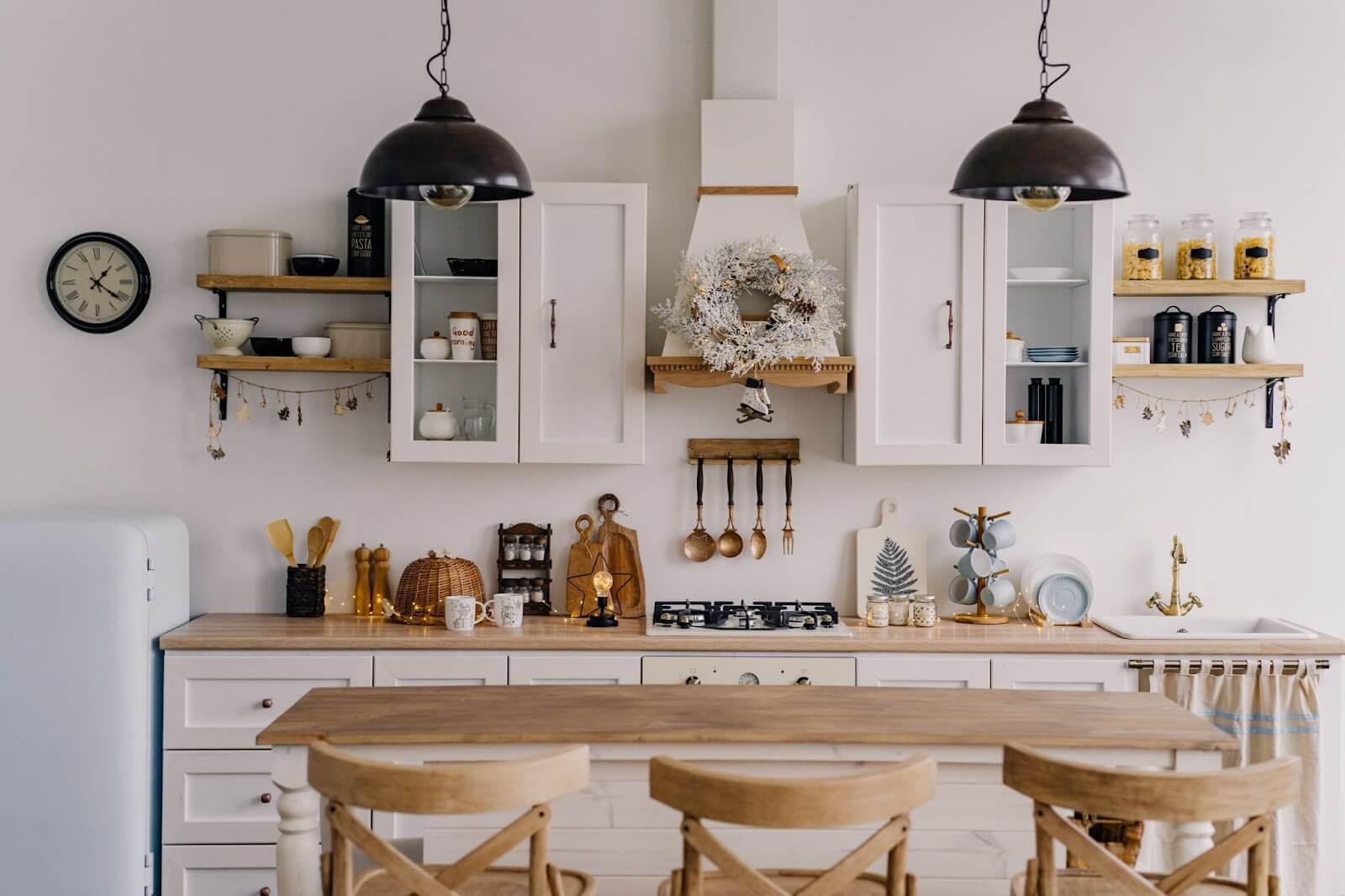
Open kitchen shelves put your personality on display by creating a welcoming atmosphere that reflects how you live in your kitchen. They make your kitchen feel lived-in and welcoming, whether it’s a row of vintage mugs, a line of spice jars, or heirloom glassware. These shelves have an airy feel, offer design flexibility, and turn everyday items into part of the décor.
When integrated into bespoke cabinetry, open shelving adds more function and elegance. Tailor them to your layout and style, highlighting practical tools and personal treasures.
In this guide, we’ll explore creative, functional ways to use open kitchen shelving and how to maximize every shelf.
What is open shelving?
Open shelving replaces traditional cabinet doors with exposed, wall-mounted shelves that leave contents on display. They can run across an entire wall or sit between enclosed cabinets for a balanced look.
This shelf style makes your kitchen feel lighter and more spacious, particularly in smaller homes where visual weight matters.
Unlike closed cabinets, open kitchen shelves invite a mix of function and personality. You’ll often find a blend of dishware, plants, artwork, and even cookbooks stacked neatly in view. This flexibility makes this type of shelving so popular with homeowners.
When crafted as part of bespoke cabinetry, open shelves are fully customizable to match your kitchen’s layout, color palette, and purpose. They can be floating wood slabs or built-in alcoves with integrated lighting.
Benefits of open kitchen shelves
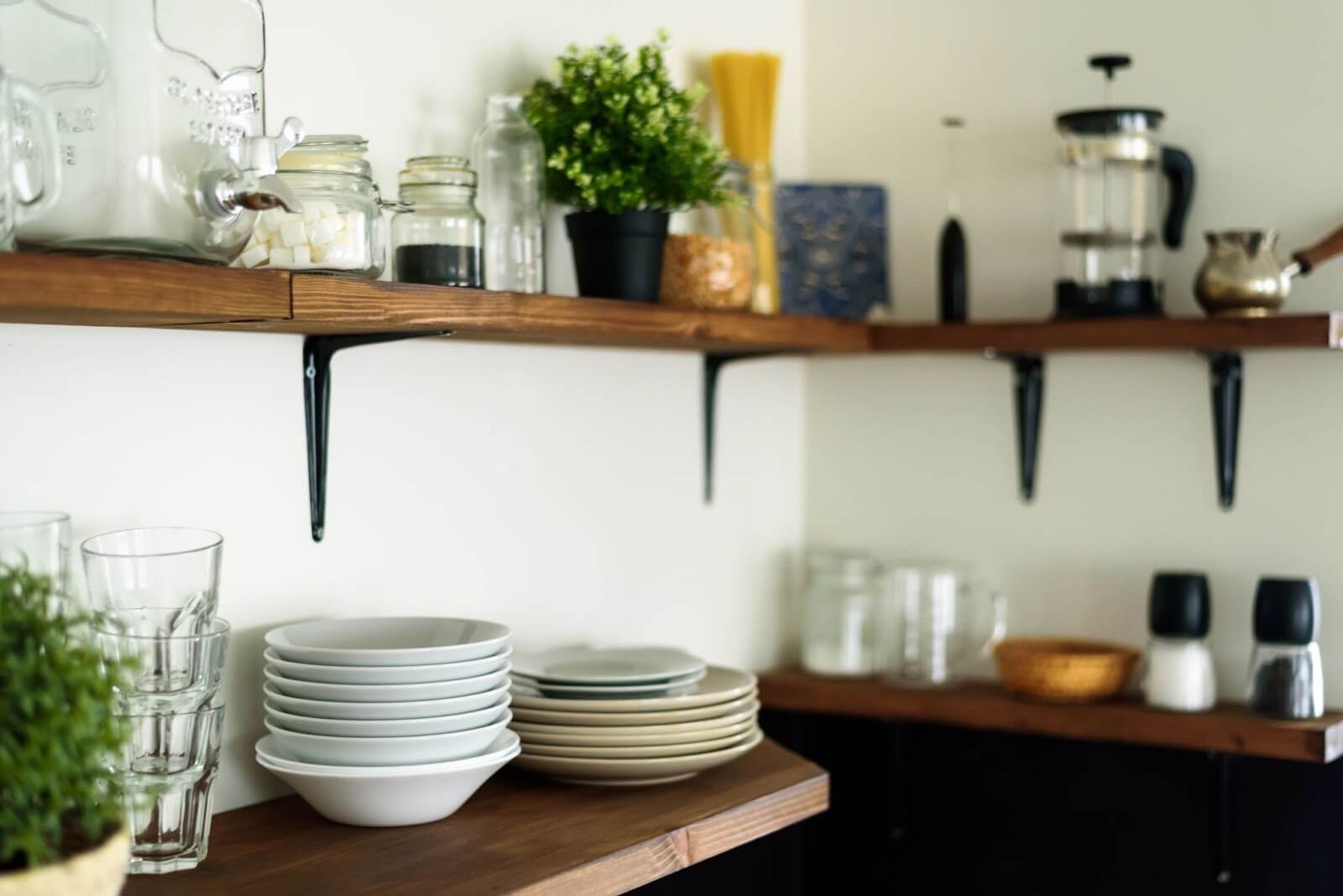
Open shelving gives your kitchen a fresh, open look while making everyday items easier to access. With everything visible and within reach, cooking and cleaning become more intuitive. No more digging through cabinets — plates, bowls, spices, and mugs are right where you need them.
This layout also allows more natural light to bounce around the room, which helps small kitchens feel larger. By reducing bulky upper cabinets, open kitchen shelves reduce visual clutter and make the space feel lighter and more breathable.
Because they’re so adaptable, open shelves blend easily into various kitchen styles. From rustic charm to minimal modernism, or anything in between, bespoke cabinetry that integrates open floating shelves lets you express your unique style while keeping things practical.
Best uses for open shelving in the kitchen
Every day dishware and glassware
These shelf types make storing and grabbing your most-used items easy without opening a single door. Plates, bowls, and drinking glasses stack neatly and stay in sight, speeding up meal prep and cleanup. They’re functional, stylish, and perfect for busy households.
Cookbooks and coffee bars
Designate shelves near your prep area or breakfast nook for your favorite cookbooks, mugs, or coffee accessories. It’s a simple way to make your kitchen feel cozy and personalized while giving you quick access to morning essentials.
Decorative items and personal touches
Open shelving is about more than function — it’s a space to show off what you love. Use a few shelves to display a mix of framed photos, potted herbs, pottery, or seasonal décor. These small details can bring warmth and charm to even the most streamlined kitchen design.
Styling tips for open kitchen shelving
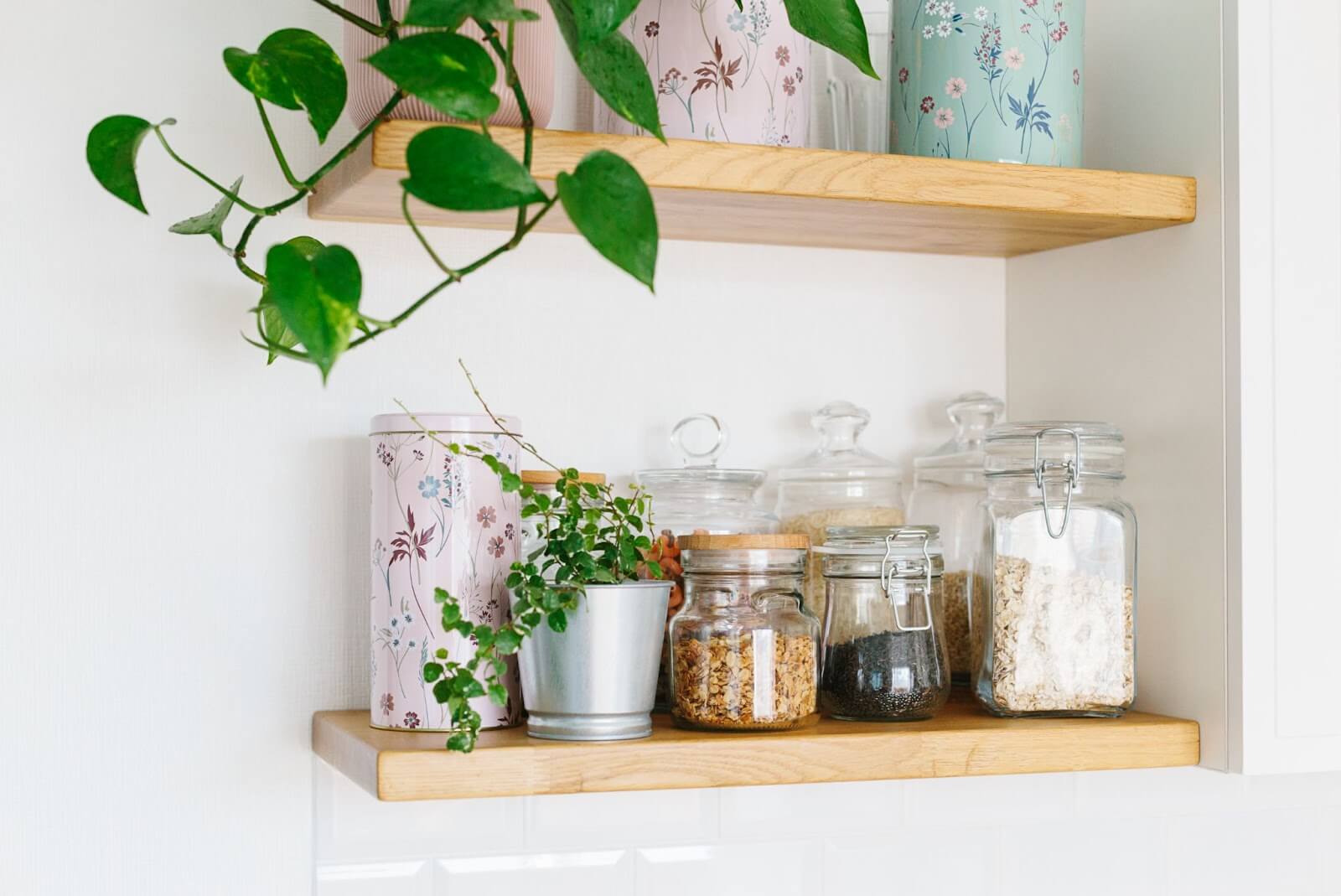
Style your shelving with intention. It’s about finding a balance between beauty and function. Group items by color, shape, or material to create visual harmony. Use stacks of plates, rows of mugs, or matching jars to keep things cohesive.
Layer items by placing taller pieces in the back and shorter ones up front. Add a few natural textures like wood, ceramic, or greenery to soften the space. Varying the height and depth of objects gives your shelves depth and movement without feeling cluttered.
Better Homes and Gardens offers extensive guidance on how to decorate floating shelves. Some of their ideas include,
“Combine everyday dishware with accessories to create a more interesting arrangement…Grab a potted plant from the living room, and pull a few cookbooks off a shelf. Gather vases, trays, candlesticks, and other decorative accents that coordinate with your kitchen’s color palette. Thrift stores are also great places to find inexpensive artwork or fun accessories to complement your open shelving decor.”
Since this shelving type is always on display, less is often more. Leave some space between items to keep shelves from feeling overcrowded.
Organizing your open shelves
Start by placing everyday items like plates and bowls on lower shelves for easy access. Reserve the top shelves for decorative pieces or items you use less often.
Use uniform containers for items like spices, grains, or baking supplies. Clear glass jars or labeled canisters help keep ingredients fresh while adding a unified look. Limit the number of categories on each shelf to keep open shelving neat; too many different uses in one space quickly look messy.
Even with the freedom open shelving offers, having a simple system makes the space feel polished and intentional.

Open shelving vs. closed cabinets
Both open shelving and closed cabinets serve a purpose — it’s knowing when and where to use each. Closed cabinets conceal storage for things like bulk groceries, small appliances, or anything that doesn’t need to be on display. They’re great for keeping visual clutter at bay.
Open shelves, on the other hand, invite character and warmth. It’s perfect for showcasing dishware, adding personality, and making your kitchen feel open and lived-in. It allows quicker access to everyday items, which makes cooking and cleaning more efficient.
Many homeowners choose a mix of both. Upper walls may feature a few rows of open shelves, while lower cabinets remain closed for functional storage. Read 10 Design Tips for Custom Cabinets from our blog.
Materials and finishes that work well with open shelves
Different materials affect how open kitchen shelves look and perform. Wood is one of the most popular choices — it brings warmth, natural grain, and timeless appeal. Lighter woods like oak or maple feel fresh and casual, while darker tones like walnut or cherry offer richness and contrast.
Metal and glass also make good options for modern or industrial kitchens. Steel brackets, brass accents, or floating glass shelves create a sleek, polished look that complements minimal designs.
Finishes matter, too. You can mix finishes — like a stained wood shelf with painted brackets — to create contrast and showcase your style. Designers often match painted or stained shelves to surrounding cabinets or use them as accents. A satin finish offers a subtle sheen and durability, while matte finishes help soften the overall look.
Great kitchen styles that complement open shelves
Open shelves add charm and flexibility to many different kitchen designs.
Reclaimed wood shelves with black or bronze brackets in farmhouse kitchens offer a rustic, homey vibe. Displaying stoneware, glass jars, and greenery completes the look.
For coastal kitchens, white or pale blue shelves paired with light woods help keep things breezy and bright.
Scandinavian kitchens make excellent use of open shelving. Floating shelves in light woods, with minimal dishware and natural textures, keep the space functional and calming.
In industrial kitchens, metal or pipe brackets paired with dark wood shelves and exposed materials give an edge without sacrificing warmth.
No matter your style, bespoke cabinetry lets you match the shelf material, layout, and finish to your kitchen design. Open kitchen shelves complement and elevate your overall aesthetic, whether your space leans classic, modern, or somewhere in between.
How to maintain and clean open kitchen shelves
Open shelving adds beauty and function, but it’s also exposed to daily kitchen messes like grease, dust, and spills. Meaning, it requires regular cleaning to maintain its appearance and usefulness.
Dawn Dish Soap says to “Degrease kitchen cabinet exteriors at least once a week.”
Wipe down shelves regularly with a microfiber cloth to remove dust. Use a gentle degreaser or diluted vinegar solution to cut through grime in high-use areas near the stove or sink. Choose materials and finishes that are easy to clean, such as sealed wood or powder-coated metal.
Avoid overcrowding shelves, which makes cleaning harder and leads to visual clutter. Leave space between items so you can easily reach behind and underneath them. If you display dishware or pantry items, rotate them occasionally so nothing gathers too much dust or grease.
Get custom options from Utah Express Cabinets
Open shelves offer more than a trendy design moment — they bring personality, convenience, and timeless style to your kitchen. From showing off favorite dishes to creating breathing room in a small layout, open shelves serve a purpose while keeping your space curated and comfortable.
Utah Express Cabinets will help you pair bespoke cabinetry with open shelving for a seamless part of your kitchen’s design. We work with you to build every shelf for your style, space, and needs.
Explore custom solutions with Utah Express Cabinets. From open shelving to complete kitchen transformations, our team is here to help you build a space that feels like home. Visit utahexpresscabinets.com or contact us to get started.