

Selecting the right cabinet wood is a crucial decision that significantly affects both the aesthetics and functionality of your kitchen, bathroom, or storage areas. The type of wood you choose not only dictates the overall look and feel of the room but also impacts the longevity and durability of your cabinets. With many options available, understanding the key factors to consider when picking out cabinet wood becomes essential to making an informed choice that aligns with your design vision and practical needs.
Firstly, durability stands as a primary concern. Cabinet wood must withstand daily use, resist moisture and temperature changes, and maintain its integrity over time. Hardwoods like oak, maple, and cherry offer robustness and longevity, making them popular choices for cabinets that last generations. However, the right wood type for you also depends on the specific conditions and usage patterns of your space.
Grain patterns and color variations in wood contribute significantly to the visual appeal of your cabinets. Each wood type boasts unique characteristics. These natural aesthetics can define the ambiance of a room, lending warmth, elegance, or rustic charm based on your preference.
Compatibility with finishes and stains is another aspect of cabinet wood choice. Some woods absorb stains evenly, allowing for a wide range of color options, while others are best left with a natural or lightly tinted finish to highlight their inherent beauty. Consider also how the wood’s color will evolve over time.
Choosing the right cabinet wood involves balancing these factors to achieve your desired style and function. As you embark on this selection process, remember to choose a wood with lasting durability and adaptability to your home’s evolving aesthetic.
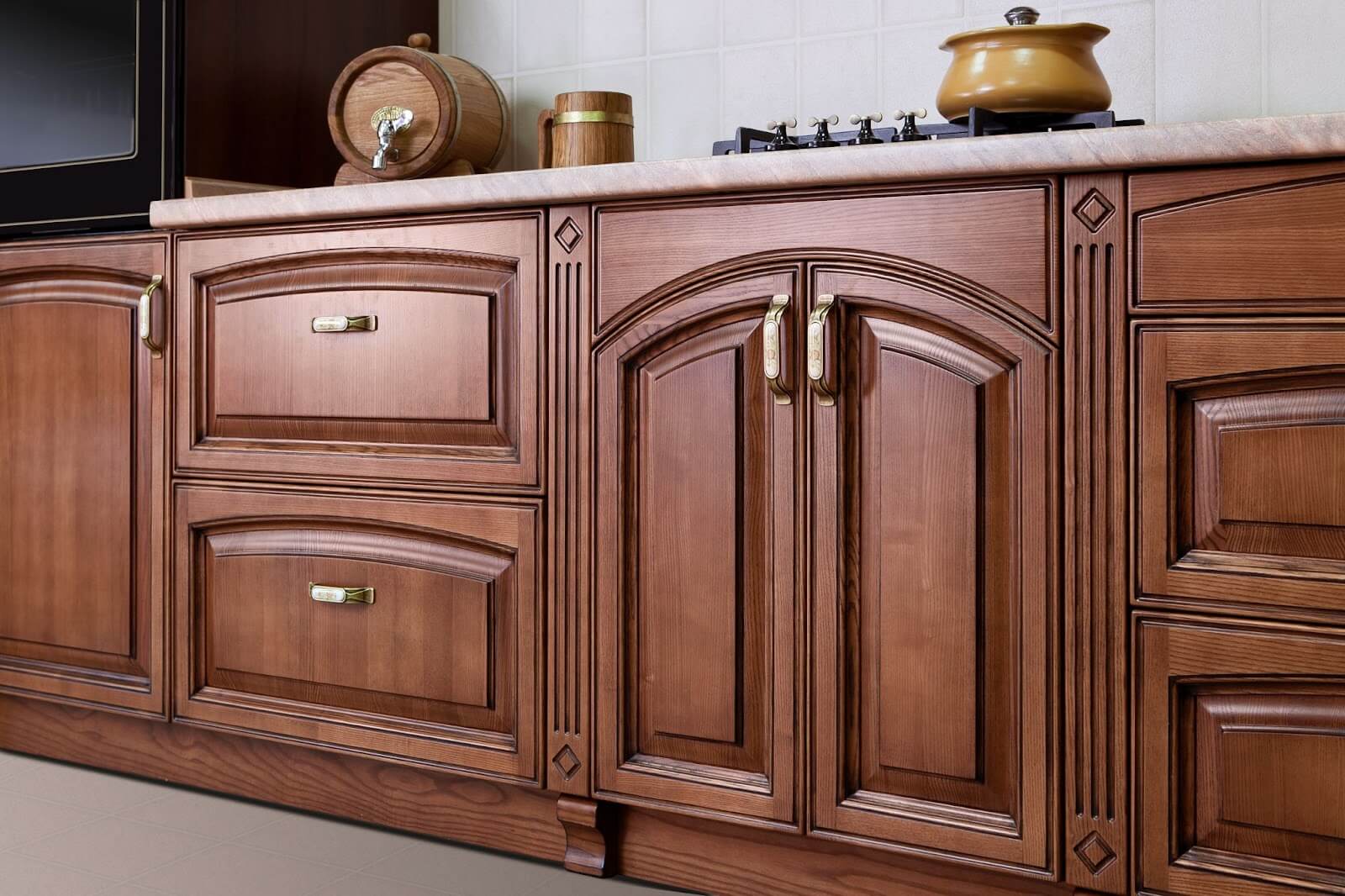
Wood cabinet basics
Understanding the fundamentals of cabinet wood is helpful for anyone looking to enhance their space with quality cabinetry. Cabinet wood varies widely in density, hardness, and grain patterns. Each factor plays a pivotal role in the wood’s appearance and performance over time.
Density and hardness
The density of wood affects its weight and strength, which in turn influences its durability and suitability for cabinetry. Hardwoods — derived from deciduous trees like oak, maple, and cherry — are generally denser and more durable, making them ideal for cabinets that endure frequent use and wear. Their density contributes to the wood’s resistance to dents and scratches, a critical consideration for areas of high activity within the home.
Grain patterns
The grain pattern of wood not only defines its visual appeal but also its workability. Woods like oak have pronounced grain patterns, offering a distinct, textured look that adds character to cabinets. In contrast, woods like maple feature a more subtle grain pattern, providing a smooth and uniform appearance. Choosing between prominent and subtle grain patterns depends on the desired aesthetic effect and the room’s overall design theme.
Hardwoods vs. softwoods
When selecting cabinet wood, consider the differences between hardwoods and softwoods. Hardwoods, as mentioned, are known for their durability and resistance to wear, making them a popular choice for high-quality cabinetry that lasts. Softwoods, sourced from coniferous trees like pine and cedar, are lighter and less dense. While softwoods may offer a cost-effective solution for some applications, they typically do not match the longevity and resilience of hardwoods in cabinet making.
Hardwoods also tend to have a more varied and aesthetically pleasing range of colors and grain patterns, enhancing the visual appeal of cabinets. Their strength allows for finer detailing and more intricate designs, which is why they are often the preferred choice for custom cabinets and high-end cabinetry projects.
Popular hardwood types for cabinets
Choosing the right wood type for your cabinets depends on your design preferences, the room’s functionality, and the desired atmosphere. Understanding the unique characteristics of each wood type helps homeowners select the right hardwoods for their cabinets. Each hardwood offers a unique way to enhance the beauty and functionality of your cabinetry. The popular choices of oak, maple, cherry, and hickory provide distinct advantages and aesthetic qualities.
Oak
Known for its strength and durability, oak is a classic choice for cabinetry. It features a pronounced grain pattern, typically straight with occasional swirls and knots, adding depth and texture to the cabinets.
Oak comes in two varieties: red oak, which has a warmer tone, and white oak, known for its cooler hues. Both types accept stains well, allowing for a range of color options from natural to dark finishes. Oak’s resilience makes it ideal for traditional and rustic kitchen designs, where its character truly shines.
Maple
Maple cabinets offer a clean, contemporary look thanks to their fine, uniform grain pattern. This hardwood is known for its light, natural color, brightening up spaces and creating an airy feel.
Maple’s smooth surface is excellent for painting or staining, though it is often kept in a natural or lightly stained finish to highlight its inherent beauty. Its durability and resistance to wear make maple a superb choice for kitchens and bathrooms, which lends a subtle elegance to the design.
Cherry
Cherry wood is prized for its rich, warm tones and smooth grain pattern. It naturally ranges from light pink to reddish-brown and darkens gracefully with age, adding character and depth to the cabinetry. Cherry’s uniform grain allows for a smooth finish, making it a favorite for high-end, luxurious cabinet designs. Its workability and durability are excellent for intricate detailing, and its classic beauty fits well in both traditional and contemporary settings.
Hickory
Hickory stands out for its bold, varied grain pattern and color variation, from light to dark brown within the same piece of wood. Hickory’s distinctive appearance brings a rustic charm to cabinets, ideal for creating a statement in kitchens or bathrooms.
This hardwood is exceptionally hard and durable, making it suitable for high-traffic areas prone to wear and tear. Despite its toughness, hickory works well with natural finishes and stains, offering versatility in design.
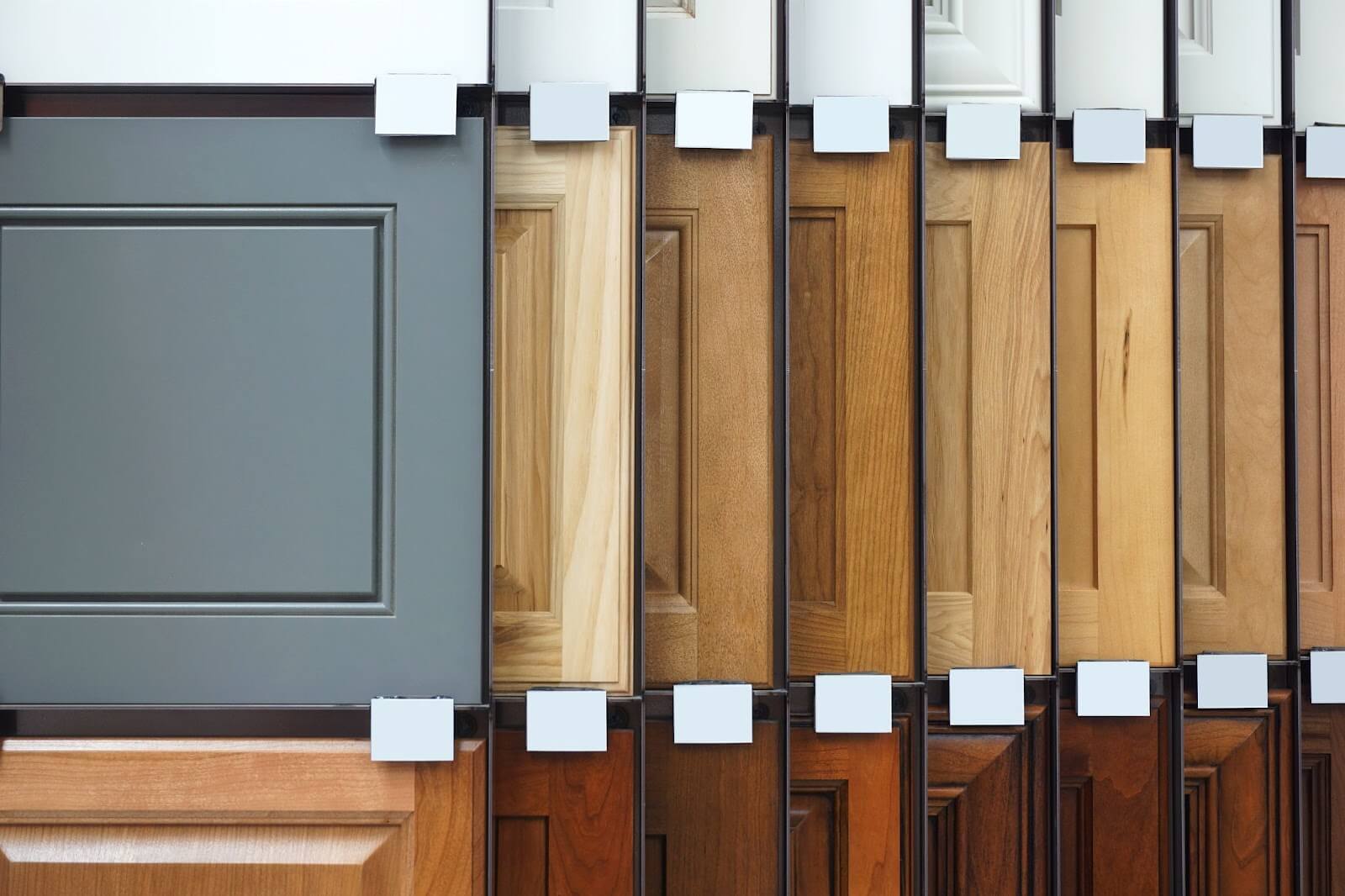
Softwoods and alternative woods for cabinets
While hardwoods often take the spotlight for cabinet construction, softwoods and alternative materials also present valuable options, each with unique characteristics suitable for various cabinetry needs.
Choosing cabinets made from softwoods or alternative materials like bamboo and reclaimed wood offers unique aesthetic options and supports sustainable practices. Whether you’re drawn to the rustic charm of pine and cedar, the sleek modernity of bamboo, or the rich history of reclaimed wood, each material provides a distinctive way to enhance the functionality and style of your cabinetry, aligning with various design visions and environmental considerations.
Pine
Pine is a popular softwood choice for cabinets, offering a lighter alternative to hardwoods. Its creamy yellow hue, accented by brown knots, injects warmth and a rustic charm into spaces.
Pine is relatively soft, making it easier to work with for detailed carvings and designs. However, its softer nature means it may dent or scratch more easily than hardwoods, making it a better fit for areas of the home that see less traffic. Pine accepts paint and stains well, allowing for a range of aesthetic finishes from traditional to country styles.
Cedar
Cedar, another softwood, is known for its rich color palette, ranging from light amber to deep reddish hues. Cedar cabinets add a distinctive look to any room and a pleasant, natural aroma. The wood’s natural oils offer added resistance to moisture and insects, making cedar an excellent choice for storage cabinets in basements or garages. Like pine, cedar is softer than hardwoods, which necessitates careful handling to prevent damage.
Alternative materials
Exploring alternative materials broadens the scope of sustainability and innovation in cabinetry.
Bamboo
Bamboo, for instance, stands out for its eco-friendly attributes and durability. Technically a grass, bamboo grows rapidly and regenerates quickly, making it an excellent choice for environmentally conscious homeowners. Bamboo cabinets offer a sleek, modern look with a unique grain pattern that differs from traditional woods. Their strength and resistance to moisture make them suitable for kitchens and bathrooms.
Reclaimed wood
Reclaimed wood brings history and character to cabinetry, offering an eco-friendly solution by repurposing lumber from old buildings, barns, and other structures. Each piece of reclaimed wood tells a story, with marks, nail holes, and weathering that add depth and texture to cabinets. This option supports sustainability and provides a unique, rustic aesthetic that’s impossible to replicate with new wood.
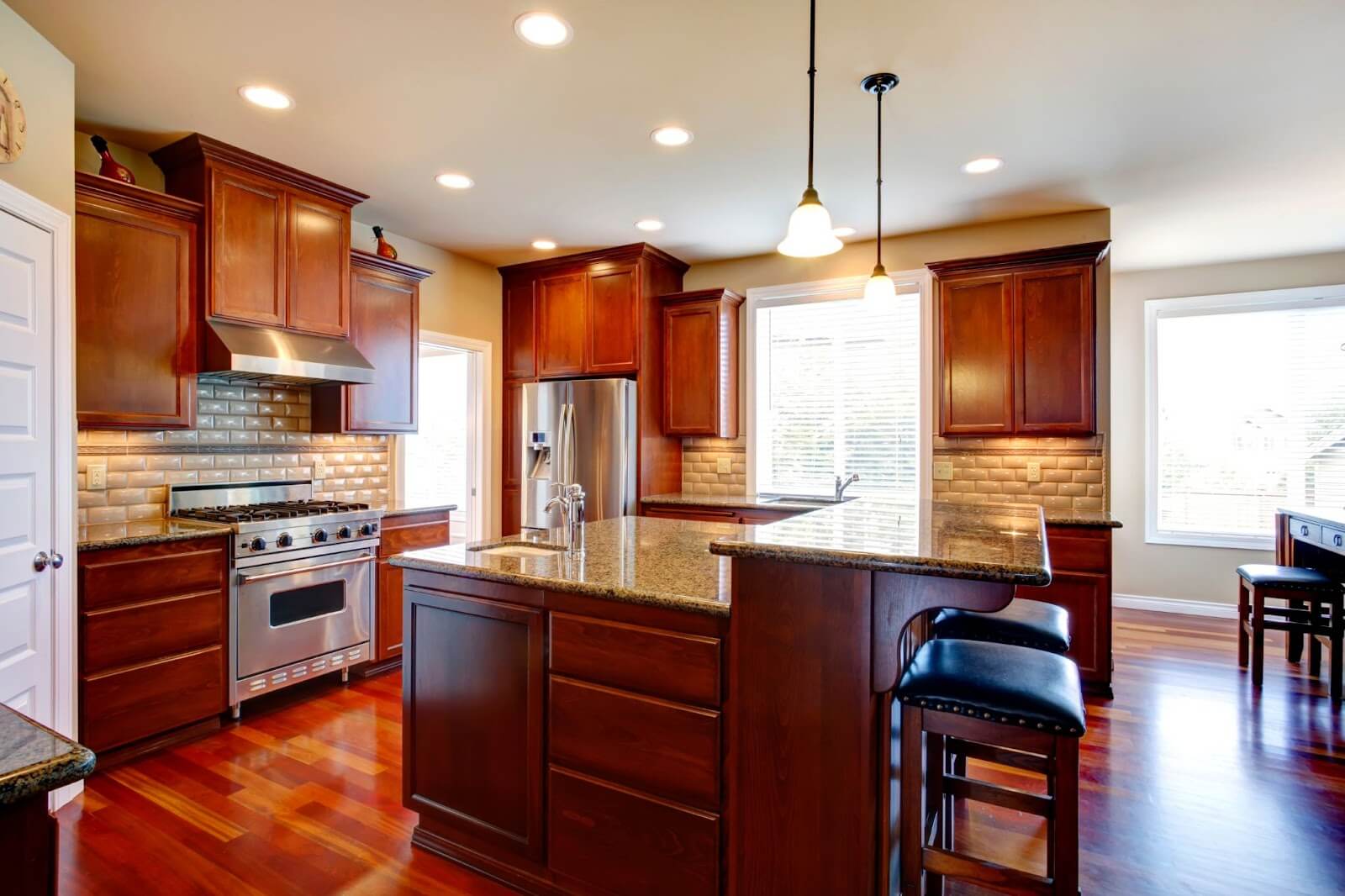
Staining and finishing wood cabinets
Staining and finishing play pivotal roles in enhancing the natural beauty of cabinet wood and ensuring its durability over time. The right stain brings out the wood’s unique grain patterns and colors, while a quality finish protects the wood from moisture, stains, and wear to extend the life of your cabinets.
When selecting a stain for your wood cabinets, consider the inherent color and grain of the wood. For woods with a naturally beautiful grain, such as oak or cherry, use a light stain to highlight this feature. Darker stains work well with woods with a more uniform color, adding depth and richness to the cabinets.
Before staining all your cabinets, test the stain on a small, inconspicuous area to ensure it produces the desired effect. Remember, the final color varies based on the wood’s original hue and absorption rate.
The choice of finish is equally important, as it seals the stain and wood, providing a protective barrier. A high-quality finish enhances the cabinet’s appearance and guards against scratches, dents, and the effects of humidity.
Polyurethane finishes offer a durable, clear coat that works well for high-traffic areas, maintaining the wood’s natural look while offering strong protection. For a more natural appearance, use tung oil or linseed oil finishes. These finishes penetrate the wood, protecting it from within and bringing out its natural beauty.
Matte finishes are ideal for hiding minor imperfections and providing a contemporary look, while gloss finishes add sheen and depth, making the color pop and the grain stand out. The choice between matte and gloss often comes down to personal preference and the desired aesthetic effect.
Additionally, consider the maintenance and care each type of finish requires. Some finishes, like oil-based ones, may need regular reapplication to maintain their protective qualities and appearance. On the other hand, polyurethane finishes are more durable and require less upkeep, making them a practical choice for busy households.
Selecting the right stain and finish for your wood cabinets is critical in achieving the desired look and ensuring their longevity. Considering the wood’s natural characteristics and the cabinet’s use will help you choose a combination that highlights the beauty of the wood and provides protection to withstand the demands of daily life.
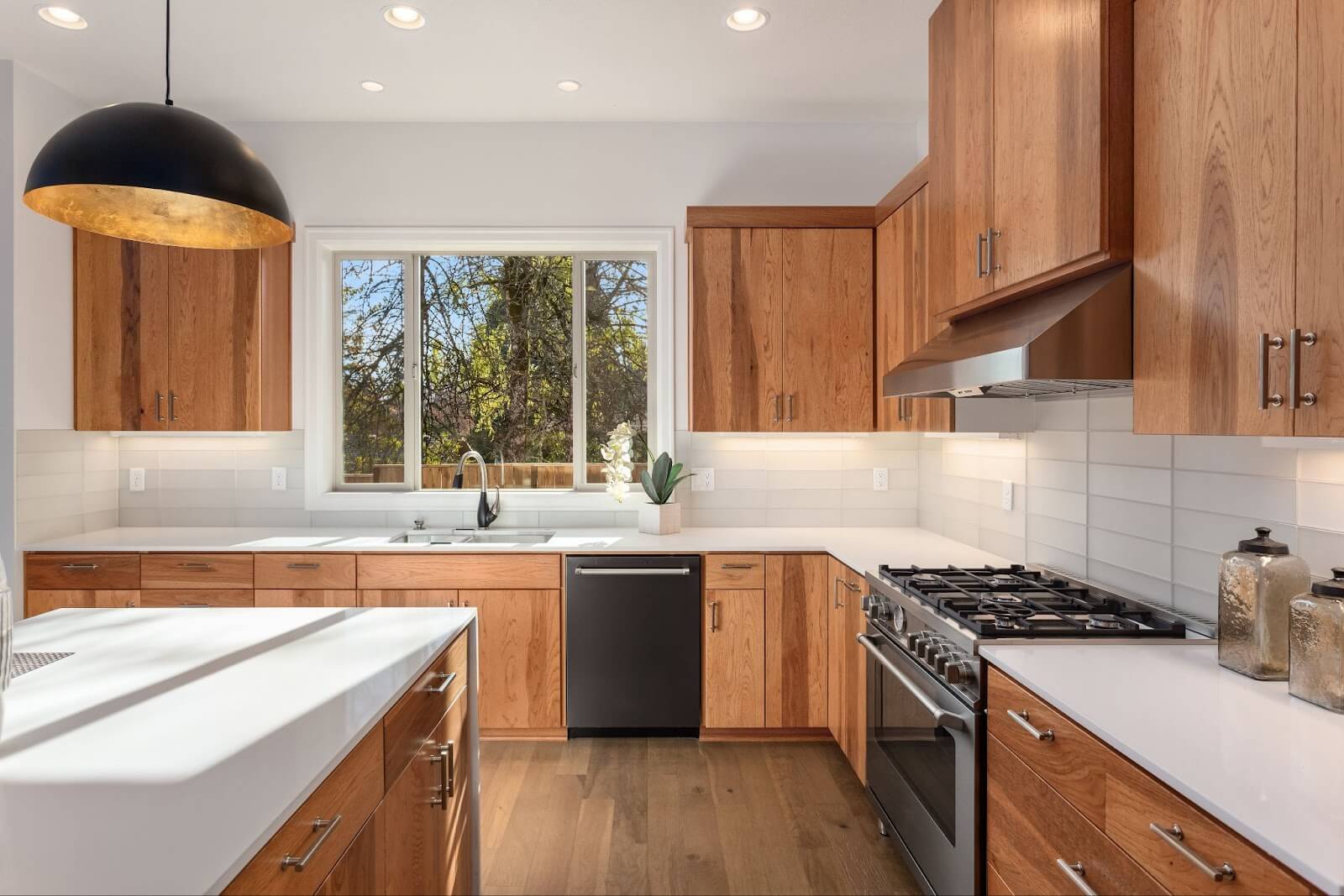
Maintenance and care for wood cabinets
Maintaining and caring for your wood cabinets is key to preserving their look and longevity. Regular maintenance routines keep your cabinets looking their best and protect them from the wear and tear of daily use. Here are some essential tips to help you take care of your wood cabinets effectively:
Dusting and cleaning
First, dust your cabinets regularly with a soft, lint-free cloth to prevent buildup. Dust can be abrasive over time, so gentle, frequent dusting will help maintain the wood’s finish.
For deeper cleaning, avoid harsh chemical cleaners that will strip the finish or damage the wood. Instead, opt for a mild soap and water solution.
Apply the solution with a soft sponge or cloth, wringing out excess liquid to avoid saturating the wood. Gently wipe the surfaces, paying extra attention to handles and areas around hardware where grease and grime accumulate. Always follow up with a dry cloth to remove any moisture.
For sticky spots or grease buildup, a solution of vinegar and water is an effective, natural cleaner that won’t harm the finish. Mix a cup of white vinegar with a gallon of warm water and gently scrub the affected areas. The vinegar cuts through grease without the need for harsh chemicals.
It’s also crucial to address spills and splatters immediately. Wood is porous, and liquids can seep into the finish, causing stains or damage. Wipe up spills as soon as they happen with a soft, dry cloth to prevent any potential harm to the wood.
Polishing and conditioning
Finally, consider using cabinet polish or wood conditioner a few times a year to nourish the wood and maintain its luster. These products help replenish natural oils in the wood, keeping it resilient and beautiful. Always choose products compatible with your cabinets’ finish and test them in an inconspicuous area first.
By following these simple maintenance and care routines, you can ensure your wood cabinets remain a beautiful and functional part of your home for years to come.
Trends and innovations in cabinet wood types
The world of cabinet wood types is constantly evolving, with new trends and innovations shaping the choices of homeowners and designers alike. A movement towards natural, sustainable materials stands out in wood types, reflecting a growing awareness of environmental concerns. Bamboo, for instance, has surged in popularity due to its rapid renewability and strength, offering a green alternative without compromising durability or aesthetic appeal.
Color trends in cabinet wood are also shifting, with a notable preference for warm, earthy tones. Woods that naturally exhibit these hues, such as walnut and mahogany, are increasingly sought after. These woods bring warmth to interiors, creating inviting spaces that blend modern sensibilities with natural elements.
Texture plays a significant role in current trends as well. The demand for cabinets showcasing the wood’s natural grain and texture is rising. Techniques that highlight these features, such as wire brushing, give cabinets a tactile quality that adds depth and character to the design.
Technological advancements in wood treatment are enhancing the functionality of wood cabinets. Treatments that increase resistance to moisture and wear are making woods traditionally considered too soft or delicate for cabinetry, such as pine, more viable options. These innovations expand the palette of wood types suitable for cabinetry, allowing for greater customization and personalization in kitchen and bathroom designs.
Embracing these trends and innovations, we see a future where cabinet wood types not only define the style of a space but also contribute to its sustainability and adaptability.

Explore wood cabinet options with Express Cabinets
Choosing the right wood type for your cabinets significantly impacts your home’s overall look, feel, and functionality. The wood type you choose sets the tone for your space, contributing to a home that feels uniquely yours.
Your home deserves the best, including cabinetry that meets your aesthetic preferences and serves your functional needs. At Express Cabinets, we pride ourselves on offering a wide range of high-quality wood cabinets that cater to every style and need. Our expertise lies in guiding you to the perfect cabinet choice that aligns with your vision, ensuring your cabinets enhance your home’s beauty and functionality. We’re committed to delivering excellence, quality, and customer satisfaction with every piece.We invite you to explore the possibilities with us. Visit Express Cabinets to browse our extensive collection or schedule a consultation. Let us help you make your dream home a reality with the perfect wood cabinets tailored to your unique style and needs.